


ach year on October 31, the United Nations closes Urban October with World Cities Day, an observance the General Assembly first marked in 2014. This year the global celebration moves to Fuzhou, on China's southeastern coast, where ministers, mayors, UN-Habitat officials, and community organizers will spend three days, through November 2, on a theme that sounds technical until you look deeper: “Regenerating the City: Adequate Housing for All.” Behind that phrase sits a number that should get the attention of every foreign ministry. UN-Habitat's World Cities Report 2026 estimates that as many as 3.4 billion people lack secure, safe, and adequate housing; more than a billion of them in informal settlements and slums. Housing ministers will read that as a planning statistic; but anyone who works in international affairs should read it as a measure of how much of humanity lives without the basic stability on which every other promise of the international order depends.
The diplomats we forgot to count
When Diplomatic Courier convened the first World in 2050 gathering, the question on the table was how diplomacy itself would change by mid-century. One answer kept resurfacing, and it eventually led us to dedicate whole convenings to cities alongside food security, health, jobs, and education: more and more of the work of global cooperation would happen below the level of the nation-state, in the places where people actually live. Fifteen years on, that intuition sounds less like foresight and more like a description of the present. More than half the world's population already lives in towns and cities, and the UN expects that share to approach 70 percent by 2050, with most of the growth in Asia and Africa. Treaties are still signed in capitals, but whether their commitments become cleaner air, safer streets, or a functioning clinic is increasingly decided by a mayor's budget and a city council's vote.
The clearest evidence comes from climate. C40 now links 96 cities home to roughly 920 million people and close to a quarter of the global economy. Membership comes with conditions that would be the envy of most multilateral agreements: every city must show measurable progress on halving fossil fuel use by 2030, on building resilience, and on advancing justice in how climate action is delivered, and the network holds its members collectively accountable for all three. Its influence reaches well beyond its roster, since its open Knowledge Hub serves some 2.6 million users across 28,000 cities. Its newest campaign, a Global Urban Data Centres Pact, has mayors setting expectations for the digital infrastructure of the AI era, a field where most national regulators are still drafting their first questions. It is fitting that Fuzhou, this year's World Cities Day host, is itself a C40 member.
Health makes the same case through a different door. Cardiometabolic disease is on course to claim more than 25 million lives a year by 2030, many of them before age 60, and its drivers (what people eat, how far they commute, how long they wait for a clinic appointment, whether a blood-pressure reading ever reaches a doctor) are shaped by decisions cities make every day. The Novartis Foundation's CARDIO4Cities began from that premise in São Paulo, Dakar, and Ulaanbaatar, working with municipal health authorities across six pillars folded into its name: quality of care, access, policy reform, data and digital technology, intersectoral collaboration, and local ownership. Within one to two years, population-level hypertension control in those pioneer cities improved by as much as sixfold, which translated into up to 12 percent fewer strokes and 13 percent fewer heart attacks. What I find most instructive is the governance model underneath the results, in which a foundation, a city health department, private firms, and multilateral lenders agree on one roadmap and one set of numbers, and then answer to the residents who live with the outcome. That is coalition diplomacy, practiced at the scale of a blood-pressure cuff.
What national capitals should take from this
City networks succeed for a reason diplomats should recognize: accountability is close. A mayor who promises cleaner buses or shorter clinic queues meets the people affected at the grocery store, and that proximity produces a discipline that summit communiqués rarely achieve. Yet cities remain guests in the rooms where the rules are written. They hold no formal seat at most climate, health, or development negotiations, and they struggle to borrow directly from the institutions whose goals they are delivering. Three shifts would change that.
First, multilateral processes should give cities and their networks formal standing, with a defined role in setting targets and reporting progress, so that the governments closest to implementation help shape what is being implemented.
Second, development finance should flow to subnational governments directly and at scale, with the credit enhancements and technical support that let a well-run city in Dakar or Ulaanbaatar borrow on terms that reflect its performance rather than its country's sovereign rating.
Third, foreign ministries should build real city desks, staffed by people who treat housing, heat, and hypertension as matters of national interest, because a country whose cities cannot shelter or protect their residents will find its diplomacy weakened at the source.
There is a geopolitical dividend here as well. In a period when great-power relationships are strained, cities continue to cooperate across lines that national governments find hard to cross. Mayors in Fuzhou, São Paulo, and Los Angeles can compare notes on flood defenses or blood-pressure screening without first resolving the questions that divide their capitals. That kind of practical exchange is one of the few channels of trust still widening rather than narrowing, and it deserves protection.
Looking to 2050
At World in 2050, our work on megatrends keeps returning to a simple observation: the future arrives unevenly, and it arrives first in cities. That is where people learn to navigate synthetic information, weigh the trade-offs of new technologies, and practice the civic agency that democracy requires, which is why I have argued that capacities like systems thinking and civic and digital agency belong among the New Foundational Literacies every person deserves. The CARDIO4Cities results make a strong case for adding health literacy to that list, since a city that teaches its residents to understand their own risk is building resilience no hospital can supply on its own.
For twenty years, Diplomatic Courier has covered the decisions made in capitals and at summits. I suspect the next twenty will ask us to follow the story somewhere else, into city halls, neighborhood clinics, transit authorities, and housing cooperatives, where the commitments of the international system are turned into lived reality or left on paper. When the delegates gather in Fuzhou on October 31, they will be talking about housing. They will also, whether they say so or not, be talking about where the future of diplomacy now lives.
AI disclosure note: AI [Claude Opus 5.5] assisted in the research and outline of the article before it was drafted by the author.
Learn more: diplomaticourier.com/ai-transparency


a global affairs media network
The Future of Diplomacy Lives at the City Level
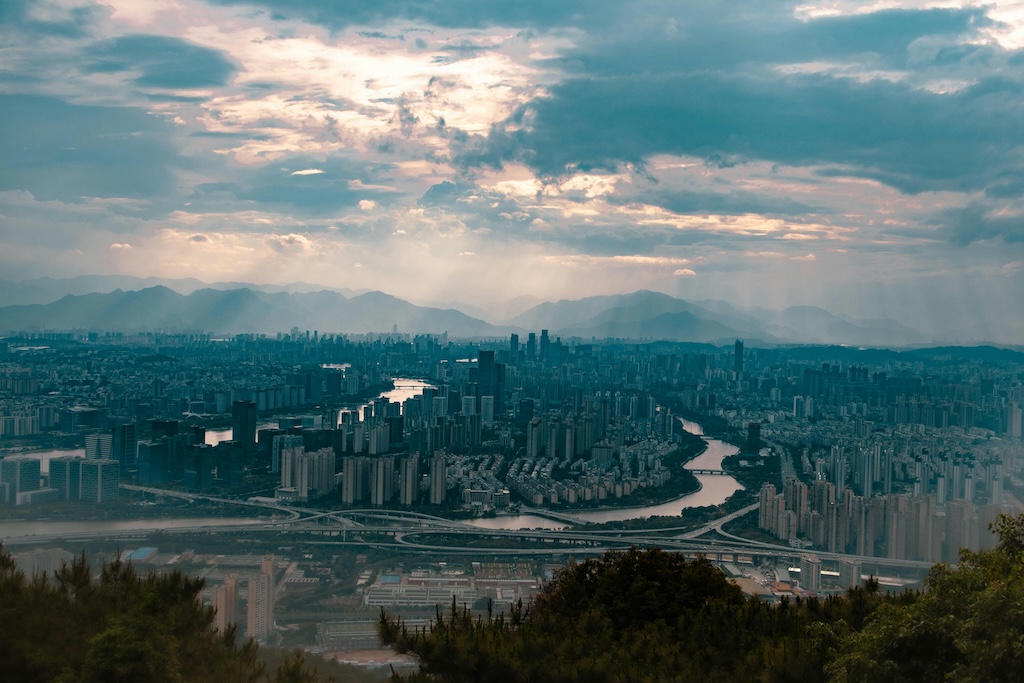
Fuzhou, Fujian, China. Photo by Xuedi Liu via Unsplash.
October 30, 2026
For World Cities Day, Diplomatic Courier's Ana C. Rold makes the case that the future of diplomacy now runs through city halls. The argument draws on a run of concrete examples of city diplomacy in action.
E
ach year on October 31, the United Nations closes Urban October with World Cities Day, an observance the General Assembly first marked in 2014. This year the global celebration moves to Fuzhou, on China's southeastern coast, where ministers, mayors, UN-Habitat officials, and community organizers will spend three days, through November 2, on a theme that sounds technical until you look deeper: “Regenerating the City: Adequate Housing for All.” Behind that phrase sits a number that should get the attention of every foreign ministry. UN-Habitat's World Cities Report 2026 estimates that as many as 3.4 billion people lack secure, safe, and adequate housing; more than a billion of them in informal settlements and slums. Housing ministers will read that as a planning statistic; but anyone who works in international affairs should read it as a measure of how much of humanity lives without the basic stability on which every other promise of the international order depends.
The diplomats we forgot to count
When Diplomatic Courier convened the first World in 2050 gathering, the question on the table was how diplomacy itself would change by mid-century. One answer kept resurfacing, and it eventually led us to dedicate whole convenings to cities alongside food security, health, jobs, and education: more and more of the work of global cooperation would happen below the level of the nation-state, in the places where people actually live. Fifteen years on, that intuition sounds less like foresight and more like a description of the present. More than half the world's population already lives in towns and cities, and the UN expects that share to approach 70 percent by 2050, with most of the growth in Asia and Africa. Treaties are still signed in capitals, but whether their commitments become cleaner air, safer streets, or a functioning clinic is increasingly decided by a mayor's budget and a city council's vote.
The clearest evidence comes from climate. C40 now links 96 cities home to roughly 920 million people and close to a quarter of the global economy. Membership comes with conditions that would be the envy of most multilateral agreements: every city must show measurable progress on halving fossil fuel use by 2030, on building resilience, and on advancing justice in how climate action is delivered, and the network holds its members collectively accountable for all three. Its influence reaches well beyond its roster, since its open Knowledge Hub serves some 2.6 million users across 28,000 cities. Its newest campaign, a Global Urban Data Centres Pact, has mayors setting expectations for the digital infrastructure of the AI era, a field where most national regulators are still drafting their first questions. It is fitting that Fuzhou, this year's World Cities Day host, is itself a C40 member.
Health makes the same case through a different door. Cardiometabolic disease is on course to claim more than 25 million lives a year by 2030, many of them before age 60, and its drivers (what people eat, how far they commute, how long they wait for a clinic appointment, whether a blood-pressure reading ever reaches a doctor) are shaped by decisions cities make every day. The Novartis Foundation's CARDIO4Cities began from that premise in São Paulo, Dakar, and Ulaanbaatar, working with municipal health authorities across six pillars folded into its name: quality of care, access, policy reform, data and digital technology, intersectoral collaboration, and local ownership. Within one to two years, population-level hypertension control in those pioneer cities improved by as much as sixfold, which translated into up to 12 percent fewer strokes and 13 percent fewer heart attacks. What I find most instructive is the governance model underneath the results, in which a foundation, a city health department, private firms, and multilateral lenders agree on one roadmap and one set of numbers, and then answer to the residents who live with the outcome. That is coalition diplomacy, practiced at the scale of a blood-pressure cuff.
What national capitals should take from this
City networks succeed for a reason diplomats should recognize: accountability is close. A mayor who promises cleaner buses or shorter clinic queues meets the people affected at the grocery store, and that proximity produces a discipline that summit communiqués rarely achieve. Yet cities remain guests in the rooms where the rules are written. They hold no formal seat at most climate, health, or development negotiations, and they struggle to borrow directly from the institutions whose goals they are delivering. Three shifts would change that.
First, multilateral processes should give cities and their networks formal standing, with a defined role in setting targets and reporting progress, so that the governments closest to implementation help shape what is being implemented.
Second, development finance should flow to subnational governments directly and at scale, with the credit enhancements and technical support that let a well-run city in Dakar or Ulaanbaatar borrow on terms that reflect its performance rather than its country's sovereign rating.
Third, foreign ministries should build real city desks, staffed by people who treat housing, heat, and hypertension as matters of national interest, because a country whose cities cannot shelter or protect their residents will find its diplomacy weakened at the source.
There is a geopolitical dividend here as well. In a period when great-power relationships are strained, cities continue to cooperate across lines that national governments find hard to cross. Mayors in Fuzhou, São Paulo, and Los Angeles can compare notes on flood defenses or blood-pressure screening without first resolving the questions that divide their capitals. That kind of practical exchange is one of the few channels of trust still widening rather than narrowing, and it deserves protection.
Looking to 2050
At World in 2050, our work on megatrends keeps returning to a simple observation: the future arrives unevenly, and it arrives first in cities. That is where people learn to navigate synthetic information, weigh the trade-offs of new technologies, and practice the civic agency that democracy requires, which is why I have argued that capacities like systems thinking and civic and digital agency belong among the New Foundational Literacies every person deserves. The CARDIO4Cities results make a strong case for adding health literacy to that list, since a city that teaches its residents to understand their own risk is building resilience no hospital can supply on its own.
For twenty years, Diplomatic Courier has covered the decisions made in capitals and at summits. I suspect the next twenty will ask us to follow the story somewhere else, into city halls, neighborhood clinics, transit authorities, and housing cooperatives, where the commitments of the international system are turned into lived reality or left on paper. When the delegates gather in Fuzhou on October 31, they will be talking about housing. They will also, whether they say so or not, be talking about where the future of diplomacy now lives.
AI disclosure note: AI [Claude Opus 5.5] assisted in the research and outline of the article before it was drafted by the author.
Learn more: diplomaticourier.com/ai-transparency


