


ach year, the UN Climate Change Conference gathers nearly 200 governments to assess progress on the Paris Agreement and argue over what comes next. From November 9 to 20, COP31 brings that negotiation to the Antalya Expo Center on Türkiye’s Mediterranean coast, with organizers expecting roughly 100,000 visitors and between 50 and 100 heads of state or government. President Recep Tayyip Erdoğan hosts the World Leaders’ Summit on November 11 and 12, placed unusually on the conference’s third and fourth days rather than at its opening. Around the formal talks, the presidency has built twelve thematic days, running from food, agriculture, and health on opening day to “İmece: Enhancing Implementation” on November 19, alongside a public Green Zone and hundreds of pavilion and side events on everything from municipal adaptation to Indigenous-led energy transitions.
Context
COP31 is the first conference in the process’s history delivered by two countries and a region. After a prolonged standoff over hosting rights, Türkiye and Australia agreed to a partnership under which Türkiye hosts the conference, holds the COP31 presidency, and leads the Action Agenda. Australia provides the President of Negotiations, with Pacific island states elevated as partners. Türkiye’s Minister of Environment, Urbanization and Climate Change, Murat Kurum, is COP31 President. Australia’s Minister for Climate Change and Energy, Chris Bowen, will steer the talks. The Pre-COP meeting was held in Nadi, Fiji, in early October, with a leaders’ component in Tuvalu meant to put the frontline of sea-level rise in front of decision-makers. However, few leaders from outside the Pacific made the trip, and the cost became a target in Australian domestic politics.
Antalya also inherits unfinished business from COP30, held last year in Belém, Brazil. The conference produced a commitment to triple adaptation finance by 2035 and an agreement to design a just transition mechanism, but final-hour bargaining stripped a fossil fuel transition roadmap from the text even though more than 80 countries backed one. Brazil’s COP30 presidency instead promised voluntary roadmaps outside the formal process, and on November 3 it published the first: a three-phase collective agenda running from 2028 to 2033 that Brasília presents as a call to action rather than a text for negotiation. The geopolitical backdrop is harder than it was a year ago. The United States has again left the Paris Agreement, energy markets remain volatile amid conflict in the Middle East, and UN Climate Change Executive Secretary Simon Stiell has called the moment “a new world disorder.”
The Turkish presidency’s answer is a framing that doubles as a strategy: an “Implementation COP,” also billed as the “COP of the Future,” organized around ten Action Agenda priorities—zero waste, oceans and seas, food security, climate-resilient cities, powering climate action, youth and education, green industrialization, clean energy transition, Rio Synergy, and resilient health systems—with finance, technology, and capacity building as enablers across all of them.
What’s on the agenda
Heading into COP31, here’s what to expect:
A presidency-led decision with 1.5°C overshoot at its center. Closing the first day of the Pre-COP in Nadi, Bowen announced that he and Kurum plan to introduce a presidency-led decision in Antalya. He signaled that the decision could address the risk of global warming exceeding the existing 1.5°C threshold and call for faster climate action. It could also recognize progress in moving away from fossil fuels and reaffirm the finance commitments made at COP29. Those include a goal of mobilizing $1.3 trillion annually by 2035 to support climate action in developing countries, alongside a call to at least triple adaptation finance. The UN Framework Convention on Climate Change’s newly released 2026 NDC Synthesis Report frames the conversation: it covers 127 new national climate plans from 154 Parties, accounting for about 71 percent of 2019 global emissions.
What to watch: whether the final decision wording treats overshoot as a mandate to accelerate or quietly normalizes it, and whether the remaining Parties file new plans before the gavel falls.
Electrification as the co-presidency’s answer to the fossil fuel question. A negotiated fossil fuel deal is not expected in Antalya. Instead, the co-presidents are championing the 35-by-35 Global Electrification Pledge, which would lift electricity’s share of global final energy consumption from roughly 20 percent today to 35 percent by 2035. The target is drawn from the International Renewable Energy Agency’s transition roadmap and backed by a commissioned International Energy Agency pathway analysis. It sits alongside companion targets to halve the growth of global waste and cut energy intensity in buildings by at least 25 percent by 2035, plus an Antalya Pledge on AI aimed at the energy demands of data centers. Critics point out that the pledge does not require new demand to be met with renewables, and France has pressed for “clean electrification” language in the outcome. Brazil’s voluntary roadmap will be discussed on November 10, Energy and Transport day.
What to watch: whether electrification is explicitly tied to clean power in final agreement language, and whether the 80-plus countries that backed a roadmap in Belém turn that support into national transition plans.
Adaptation finance meets a sobering new number. The UN Environment Programme’s new Adaptation Gap Report 2026 is titled Ready? Not. It estimates that developing countries will need about $305 billion annually for climate adaptation by 2035. Adjusted for potential inflation, that figure could rise to $420 billion. Those estimates are roughly ten to 15 times the $28.2 to $31.7 billion in international public adaptation finance that flowed in 2024. A fully delivered tripling would yield $85 to $120 billion a year, depending on how the Belém decision is read. That would cover between 20 and 29 percent of the inflation-adjusted estimated needs, and the funding gap could be wider because the report notes that its figures largely exclude private sector adaptation needs. Negotiators must also put the Global Goal on Adaptation indicators adopted last year to work.
What to watch: whether Parties agree on a baseline, milestones, and a delivery plan for the tripling, and how much of the money arrives as grants rather than loans.
The machinery of implementation. Kurum has said that financing will sit at the forefront of the agenda and has asked every country to submit its national climate plan by COP31. The presidency’s Climate Implementation Bridge is designed to help countries turn climate and development priorities into finance-ready project portfolios. Meanwhile, negotiators continue work on the just transition mechanism agreed in Belém, carbon market rules under Article 6 of the Paris Agreement, loss and damage, and the alignment of all financial flows with Paris goals under Article 2.1(c).
What to watch: whether Antalya produces bankable pipelines and working institutions, or another round of frameworks waiting for funding.
The Pacific in the room, and the ocean on the agenda. Pacific island states arrive with the 1.5°C limit, climate finance, and ocean protection pushed to the front by the Pre-COP. They also bring pointed questions for Australia, whose coal exports have boomed even as it leads the negotiations. Türkiye, bordered by sea on three sides, has made oceans a presidency priority. November 17 activities are devoted to ocean, seas, nature, and land use under a Rio Synergy banner linking the climate, biodiversity, and desertification conventions.
What to watch: whether Pacific priorities make it into the final agreement, rather than remain topics for pavilion discussions, and how much pressure Australia faces over new fossil fuel approvals.
What they’re saying
“We want COP31 to be a summit where decisions are put into practice.”
—Murat Kurum, COP31 President and Minister of Environment, Urbanization and Climate Change, Türkiye
“Keeping 1.5 alive means hope—hope for Tuvalu, hope for Kiribati.”
—Chris Bowen, COP31 President of Negotiations and Minister for Climate Change and Energy, Australia
“The agreements already exist. What’s important is to implement them.”
—André Corrêa do Lago, COP30 President
“They will need to go even higher to save lives.”
—Inger Andersen, Executive Director, UN Environment Programme (on adaptation finance)
AI disclosure note: AI [Claude Opus 5.5] assisted in the research and outline of the article before it was drafted by the author.
Learn more: diplomaticourier.com/ai-transparency.


a global affairs media network
COP31 Preview: Antalya Bets on Implementation Over Ambition
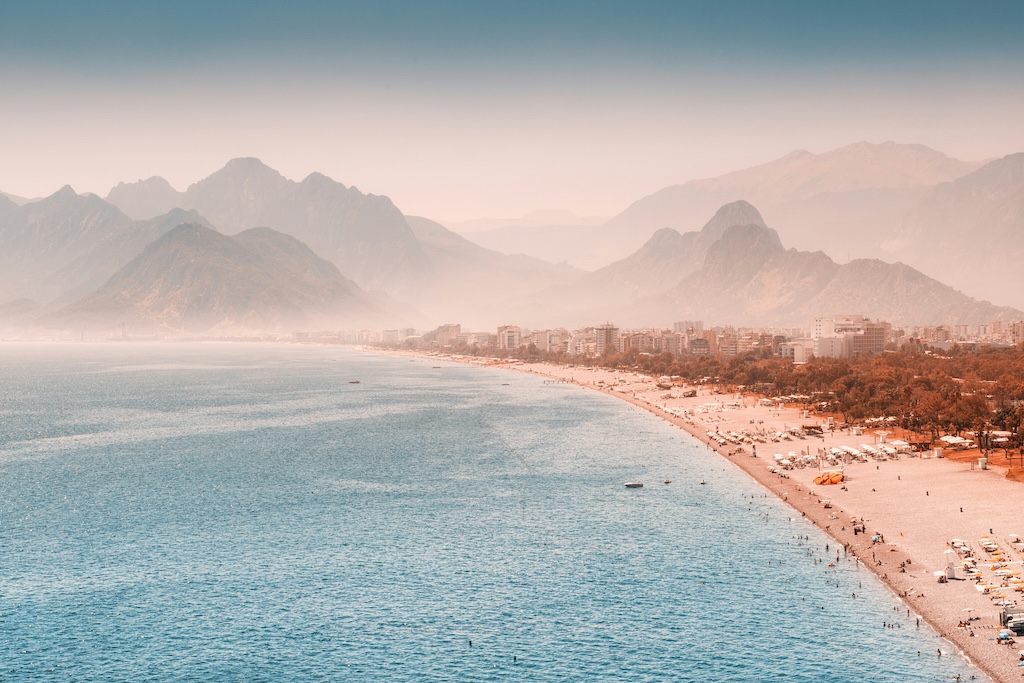
Antalya, Türkiye. Photo by Getty Images via Unsplash+.
November 11, 2026
As Türkiye and Australia share the first split presidency in COP history, the Antalya talks will test whether an “Implementation COP” can move money, electrons, and adaptation plans faster than negotiators move text.
E
ach year, the UN Climate Change Conference gathers nearly 200 governments to assess progress on the Paris Agreement and argue over what comes next. From November 9 to 20, COP31 brings that negotiation to the Antalya Expo Center on Türkiye’s Mediterranean coast, with organizers expecting roughly 100,000 visitors and between 50 and 100 heads of state or government. President Recep Tayyip Erdoğan hosts the World Leaders’ Summit on November 11 and 12, placed unusually on the conference’s third and fourth days rather than at its opening. Around the formal talks, the presidency has built twelve thematic days, running from food, agriculture, and health on opening day to “İmece: Enhancing Implementation” on November 19, alongside a public Green Zone and hundreds of pavilion and side events on everything from municipal adaptation to Indigenous-led energy transitions.
Context
COP31 is the first conference in the process’s history delivered by two countries and a region. After a prolonged standoff over hosting rights, Türkiye and Australia agreed to a partnership under which Türkiye hosts the conference, holds the COP31 presidency, and leads the Action Agenda. Australia provides the President of Negotiations, with Pacific island states elevated as partners. Türkiye’s Minister of Environment, Urbanization and Climate Change, Murat Kurum, is COP31 President. Australia’s Minister for Climate Change and Energy, Chris Bowen, will steer the talks. The Pre-COP meeting was held in Nadi, Fiji, in early October, with a leaders’ component in Tuvalu meant to put the frontline of sea-level rise in front of decision-makers. However, few leaders from outside the Pacific made the trip, and the cost became a target in Australian domestic politics.
Antalya also inherits unfinished business from COP30, held last year in Belém, Brazil. The conference produced a commitment to triple adaptation finance by 2035 and an agreement to design a just transition mechanism, but final-hour bargaining stripped a fossil fuel transition roadmap from the text even though more than 80 countries backed one. Brazil’s COP30 presidency instead promised voluntary roadmaps outside the formal process, and on November 3 it published the first: a three-phase collective agenda running from 2028 to 2033 that Brasília presents as a call to action rather than a text for negotiation. The geopolitical backdrop is harder than it was a year ago. The United States has again left the Paris Agreement, energy markets remain volatile amid conflict in the Middle East, and UN Climate Change Executive Secretary Simon Stiell has called the moment “a new world disorder.”
The Turkish presidency’s answer is a framing that doubles as a strategy: an “Implementation COP,” also billed as the “COP of the Future,” organized around ten Action Agenda priorities—zero waste, oceans and seas, food security, climate-resilient cities, powering climate action, youth and education, green industrialization, clean energy transition, Rio Synergy, and resilient health systems—with finance, technology, and capacity building as enablers across all of them.
What’s on the agenda
Heading into COP31, here’s what to expect:
A presidency-led decision with 1.5°C overshoot at its center. Closing the first day of the Pre-COP in Nadi, Bowen announced that he and Kurum plan to introduce a presidency-led decision in Antalya. He signaled that the decision could address the risk of global warming exceeding the existing 1.5°C threshold and call for faster climate action. It could also recognize progress in moving away from fossil fuels and reaffirm the finance commitments made at COP29. Those include a goal of mobilizing $1.3 trillion annually by 2035 to support climate action in developing countries, alongside a call to at least triple adaptation finance. The UN Framework Convention on Climate Change’s newly released 2026 NDC Synthesis Report frames the conversation: it covers 127 new national climate plans from 154 Parties, accounting for about 71 percent of 2019 global emissions.
What to watch: whether the final decision wording treats overshoot as a mandate to accelerate or quietly normalizes it, and whether the remaining Parties file new plans before the gavel falls.
Electrification as the co-presidency’s answer to the fossil fuel question. A negotiated fossil fuel deal is not expected in Antalya. Instead, the co-presidents are championing the 35-by-35 Global Electrification Pledge, which would lift electricity’s share of global final energy consumption from roughly 20 percent today to 35 percent by 2035. The target is drawn from the International Renewable Energy Agency’s transition roadmap and backed by a commissioned International Energy Agency pathway analysis. It sits alongside companion targets to halve the growth of global waste and cut energy intensity in buildings by at least 25 percent by 2035, plus an Antalya Pledge on AI aimed at the energy demands of data centers. Critics point out that the pledge does not require new demand to be met with renewables, and France has pressed for “clean electrification” language in the outcome. Brazil’s voluntary roadmap will be discussed on November 10, Energy and Transport day.
What to watch: whether electrification is explicitly tied to clean power in final agreement language, and whether the 80-plus countries that backed a roadmap in Belém turn that support into national transition plans.
Adaptation finance meets a sobering new number. The UN Environment Programme’s new Adaptation Gap Report 2026 is titled Ready? Not. It estimates that developing countries will need about $305 billion annually for climate adaptation by 2035. Adjusted for potential inflation, that figure could rise to $420 billion. Those estimates are roughly ten to 15 times the $28.2 to $31.7 billion in international public adaptation finance that flowed in 2024. A fully delivered tripling would yield $85 to $120 billion a year, depending on how the Belém decision is read. That would cover between 20 and 29 percent of the inflation-adjusted estimated needs, and the funding gap could be wider because the report notes that its figures largely exclude private sector adaptation needs. Negotiators must also put the Global Goal on Adaptation indicators adopted last year to work.
What to watch: whether Parties agree on a baseline, milestones, and a delivery plan for the tripling, and how much of the money arrives as grants rather than loans.
The machinery of implementation. Kurum has said that financing will sit at the forefront of the agenda and has asked every country to submit its national climate plan by COP31. The presidency’s Climate Implementation Bridge is designed to help countries turn climate and development priorities into finance-ready project portfolios. Meanwhile, negotiators continue work on the just transition mechanism agreed in Belém, carbon market rules under Article 6 of the Paris Agreement, loss and damage, and the alignment of all financial flows with Paris goals under Article 2.1(c).
What to watch: whether Antalya produces bankable pipelines and working institutions, or another round of frameworks waiting for funding.
The Pacific in the room, and the ocean on the agenda. Pacific island states arrive with the 1.5°C limit, climate finance, and ocean protection pushed to the front by the Pre-COP. They also bring pointed questions for Australia, whose coal exports have boomed even as it leads the negotiations. Türkiye, bordered by sea on three sides, has made oceans a presidency priority. November 17 activities are devoted to ocean, seas, nature, and land use under a Rio Synergy banner linking the climate, biodiversity, and desertification conventions.
What to watch: whether Pacific priorities make it into the final agreement, rather than remain topics for pavilion discussions, and how much pressure Australia faces over new fossil fuel approvals.
What they’re saying
“We want COP31 to be a summit where decisions are put into practice.”
—Murat Kurum, COP31 President and Minister of Environment, Urbanization and Climate Change, Türkiye
“Keeping 1.5 alive means hope—hope for Tuvalu, hope for Kiribati.”
—Chris Bowen, COP31 President of Negotiations and Minister for Climate Change and Energy, Australia
“The agreements already exist. What’s important is to implement them.”
—André Corrêa do Lago, COP30 President
“They will need to go even higher to save lives.”
—Inger Andersen, Executive Director, UN Environment Programme (on adaptation finance)
AI disclosure note: AI [Claude Opus 5.5] assisted in the research and outline of the article before it was drafted by the author.
Learn more: diplomaticourier.com/ai-transparency.


