


s a fragile ceasefire in the conflict between Iran and the United States comes under increasing strain, attention is shifting uneasily between the risk of renewed escalation and the uncertain prospects for diplomacy. Pakistan’s role in helping broker the initial pause and its reported efforts to facilitate follow–on talks have been widely noted as a constructive step. At the same time, recent tensions, including accusations of ceasefire violations, underline how precarious this opening remains.
Whether this tentative diplomatic track can be sustained is far from clear. The ceasefire is limited and contested, and the underlying drivers of the conflict remain unresolved. Among these, the question of Iran’s nuclear program is central. It is not only a long–standing source of tension, but also one of the most immediate obstacles to any broader de–escalation. Disputes over enrichment levels, verification mechanisms, and long–term nuclear intent continue to shape the strategic calculations of both regional and external actors.
Yet restarting nuclear discussions will not be straightforward. The diplomatic framework that once structured them has largely unraveled. The Joint Comprehensive Plan of Action, agreed in July 2015 between Iran and the P5+1 (the U.S., UK, France, Russia, China, and Germany), placed limits on Iran’s nuclear activities in exchange for sanctions relief and international monitoring. While the agreement constrained Iran’s program for a time, it was later undermined when the United States withdrew in 2018 under President Donald Trump.
In this context, even if political willingness to re–engage exists, the practical question remains: How might such discussions begin again? Pakistan’s current role highlights one pathway for facilitating dialogue. But as attention turns specifically to the nuclear file, the question of suitable venues for more technical, issue–focused engagement may also re–emerge.
This is where precedent from outside the immediate region may become relevant. In 2013, during an earlier period of deadlock, Kazakhstan hosted two rounds of talks in Almaty between Iran and the P5+1. Those meetings helped re–establish a negotiating channel at a time when dialogue had stalled. In that sense, they provided a neutral setting in which engagement could resume.
The current situation is more complex than it was a decade ago, and there is no direct parallel between the two periods. However, the Almaty talks illustrate that when formal diplomatic processes break down, progress often begins with limited, issue–specific discussions held in politically acceptable environments. In the case of Iran, the nuclear file is the most likely starting point for any such re–engagement.
Kazakhstan’s connection to this issue is not limited to its role as a previous host. Following the dissolution of the Soviet Union, the country inherited a substantial nuclear arsenal, which it chose to relinquish in the early 1990s. This decision aligned Kazakhstan with the global non–proliferation regime and has since informed its approach to nuclear governance.
That orientation is reflected in its cooperation with the International Atomic Energy Agency. In 2015, Kazakhstan agreed to host the IAEA’s Low–Enriched Uranium (LEU) Bank, a multilateral mechanism designed to provide states with access to nuclear fuel under international oversight if regular supply arrangements are disrupted. The facility is not specific to Iran, but it forms part of the broader infrastructure aimed at reducing incentives for states to develop independent enrichment capabilities.
These elements—past disarmament, involvement in international nuclear mechanisms, and prior experience hosting talks—do not position Kazakhstan as a mediator in the conventional sense. Nor do they imply that it could play a decisive role in resolving the nuclear issue. The technical and political challenges involved in any future arrangement with Iran are substantial and would ultimately depend on decisions made in Washington, Tehran, and other major capitals.
However, they do point to a more limited, and arguably more realistic, role. If discussions on Iran’s nuclear program are to resume in any form, they may initially take place outside formal negotiation frameworks, focusing on confidence–building, technical parameters, or exploratory exchanges. In such a context, the choice of venue becomes part of the process.
Kazakhstan offers certain practical advantages in this regard. It maintains working relationships with a wide range of international actors, including the United States, Russia, China, Iran, and the Gulf countries. It is geographically removed from the current conflict, and its domestic environment remains stable. These factors do not make it unique, but they do place it among a relatively small group of states that could plausibly host sensitive, issue–specific discussions without becoming directly entangled in the dispute.
Equally important is the absence of strong objections. In highly polarized environments, diplomatic initiatives can falter because a venue is unacceptable to one or more parties. Kazakhstan’s track record suggests that, at least in the past, it has been able to avoid this problem.
None of this should be overstated. The resumption of nuclear discussions with Iran, if it occurs at all, will be shaped primarily by strategic calculations in the United States and Iran, as well as by the positions of other major powers. Venue alone cannot overcome entrenched disagreements over enrichment limits, verification, sanctions, or regional security concerns.
But the early stages of diplomacy often operate at a different level. Before formal negotiations can begin, there must be opportunities for contact settings in which technical issues can be explored and positions clarified without the pressure of high–stakes bargaining.
In that narrower context, past experience becomes relevant. Kazakhstan has already been part of such a process once, during a period when progress appeared unlikely. It has since remained engaged in the institutional framework of nuclear non–proliferation. And it occupies a position in the international system that allows it to host discussions without being seen as a primary stakeholder in the dispute.
As the Middle East enters an increasingly uncertain phase, with a fragile ceasefire under strain, the nuclear dimension of the crisis is unlikely to recede. If anything, it will become more central to any long–term de–escalation. The immediate question is not only whether negotiations can resume, but whether the current, highly unstable pause can be used to initiate even limited forms of engagement before conditions deteriorate further.
There is no single answer to that question. But early stages of diplomacy rarely begin with comprehensive agreements. They tend to take shape through limited engagement, often in settings where dialogue remains politically and logistically feasible. The challenge now is less about designing a final deal than about identifying where and how such initial contacts could realistically take place, even in a constrained and uncertain environment.


a global affairs media network
Could Kazakhstan help restart nuclear diplomacy with Iran?
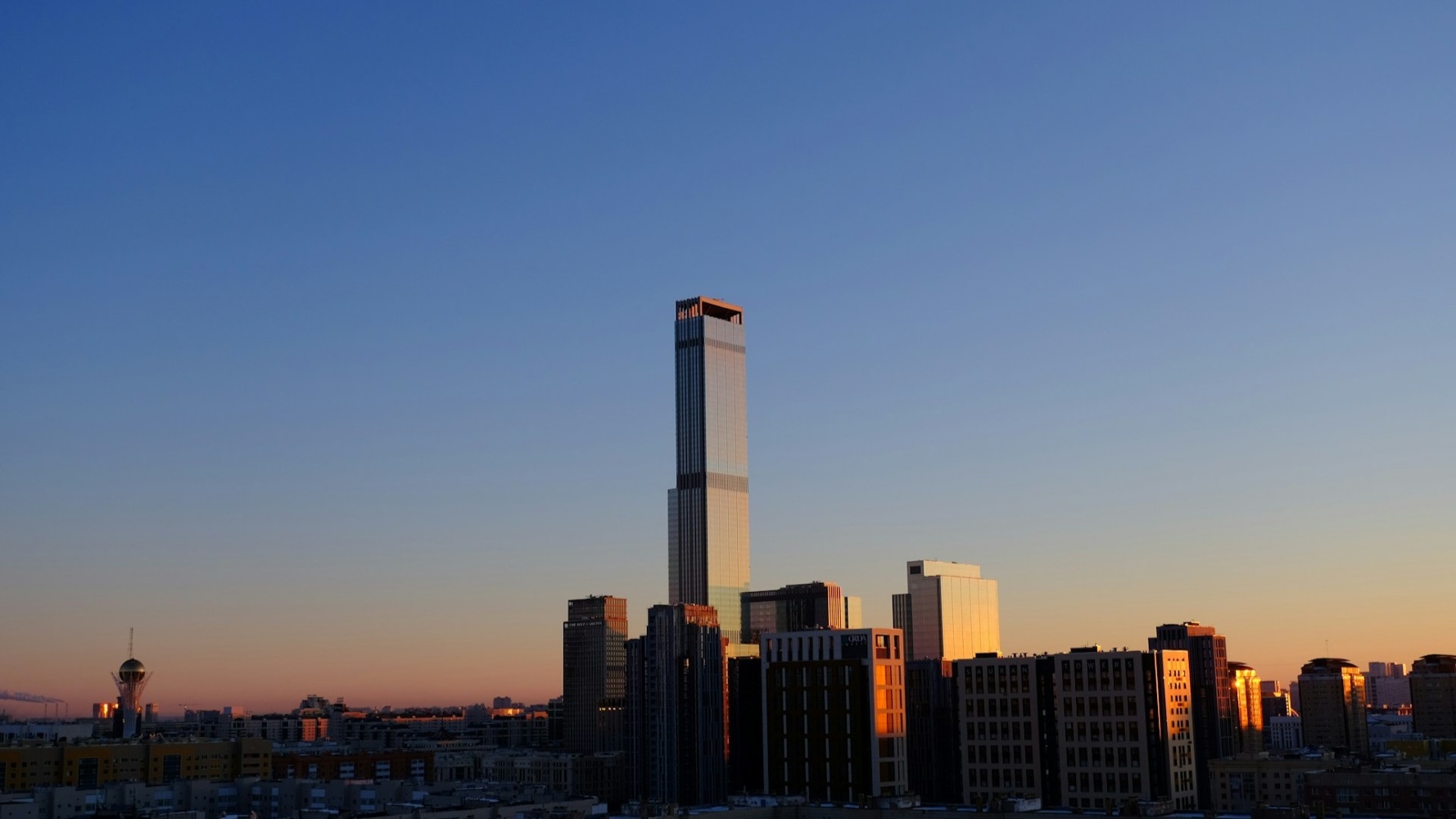
Bagzhan Sadvakassov via Unsplash.
May 14, 2026
Kazakhstan's non–proliferation record and earlier role in hosting Iran nuclear talks could make it a venue for restarting engagement, writes Emil Avdaliani.
A
s a fragile ceasefire in the conflict between Iran and the United States comes under increasing strain, attention is shifting uneasily between the risk of renewed escalation and the uncertain prospects for diplomacy. Pakistan’s role in helping broker the initial pause and its reported efforts to facilitate follow–on talks have been widely noted as a constructive step. At the same time, recent tensions, including accusations of ceasefire violations, underline how precarious this opening remains.
Whether this tentative diplomatic track can be sustained is far from clear. The ceasefire is limited and contested, and the underlying drivers of the conflict remain unresolved. Among these, the question of Iran’s nuclear program is central. It is not only a long–standing source of tension, but also one of the most immediate obstacles to any broader de–escalation. Disputes over enrichment levels, verification mechanisms, and long–term nuclear intent continue to shape the strategic calculations of both regional and external actors.
Yet restarting nuclear discussions will not be straightforward. The diplomatic framework that once structured them has largely unraveled. The Joint Comprehensive Plan of Action, agreed in July 2015 between Iran and the P5+1 (the U.S., UK, France, Russia, China, and Germany), placed limits on Iran’s nuclear activities in exchange for sanctions relief and international monitoring. While the agreement constrained Iran’s program for a time, it was later undermined when the United States withdrew in 2018 under President Donald Trump.
In this context, even if political willingness to re–engage exists, the practical question remains: How might such discussions begin again? Pakistan’s current role highlights one pathway for facilitating dialogue. But as attention turns specifically to the nuclear file, the question of suitable venues for more technical, issue–focused engagement may also re–emerge.
This is where precedent from outside the immediate region may become relevant. In 2013, during an earlier period of deadlock, Kazakhstan hosted two rounds of talks in Almaty between Iran and the P5+1. Those meetings helped re–establish a negotiating channel at a time when dialogue had stalled. In that sense, they provided a neutral setting in which engagement could resume.
The current situation is more complex than it was a decade ago, and there is no direct parallel between the two periods. However, the Almaty talks illustrate that when formal diplomatic processes break down, progress often begins with limited, issue–specific discussions held in politically acceptable environments. In the case of Iran, the nuclear file is the most likely starting point for any such re–engagement.
Kazakhstan’s connection to this issue is not limited to its role as a previous host. Following the dissolution of the Soviet Union, the country inherited a substantial nuclear arsenal, which it chose to relinquish in the early 1990s. This decision aligned Kazakhstan with the global non–proliferation regime and has since informed its approach to nuclear governance.
That orientation is reflected in its cooperation with the International Atomic Energy Agency. In 2015, Kazakhstan agreed to host the IAEA’s Low–Enriched Uranium (LEU) Bank, a multilateral mechanism designed to provide states with access to nuclear fuel under international oversight if regular supply arrangements are disrupted. The facility is not specific to Iran, but it forms part of the broader infrastructure aimed at reducing incentives for states to develop independent enrichment capabilities.
These elements—past disarmament, involvement in international nuclear mechanisms, and prior experience hosting talks—do not position Kazakhstan as a mediator in the conventional sense. Nor do they imply that it could play a decisive role in resolving the nuclear issue. The technical and political challenges involved in any future arrangement with Iran are substantial and would ultimately depend on decisions made in Washington, Tehran, and other major capitals.
However, they do point to a more limited, and arguably more realistic, role. If discussions on Iran’s nuclear program are to resume in any form, they may initially take place outside formal negotiation frameworks, focusing on confidence–building, technical parameters, or exploratory exchanges. In such a context, the choice of venue becomes part of the process.
Kazakhstan offers certain practical advantages in this regard. It maintains working relationships with a wide range of international actors, including the United States, Russia, China, Iran, and the Gulf countries. It is geographically removed from the current conflict, and its domestic environment remains stable. These factors do not make it unique, but they do place it among a relatively small group of states that could plausibly host sensitive, issue–specific discussions without becoming directly entangled in the dispute.
Equally important is the absence of strong objections. In highly polarized environments, diplomatic initiatives can falter because a venue is unacceptable to one or more parties. Kazakhstan’s track record suggests that, at least in the past, it has been able to avoid this problem.
None of this should be overstated. The resumption of nuclear discussions with Iran, if it occurs at all, will be shaped primarily by strategic calculations in the United States and Iran, as well as by the positions of other major powers. Venue alone cannot overcome entrenched disagreements over enrichment limits, verification, sanctions, or regional security concerns.
But the early stages of diplomacy often operate at a different level. Before formal negotiations can begin, there must be opportunities for contact settings in which technical issues can be explored and positions clarified without the pressure of high–stakes bargaining.
In that narrower context, past experience becomes relevant. Kazakhstan has already been part of such a process once, during a period when progress appeared unlikely. It has since remained engaged in the institutional framework of nuclear non–proliferation. And it occupies a position in the international system that allows it to host discussions without being seen as a primary stakeholder in the dispute.
As the Middle East enters an increasingly uncertain phase, with a fragile ceasefire under strain, the nuclear dimension of the crisis is unlikely to recede. If anything, it will become more central to any long–term de–escalation. The immediate question is not only whether negotiations can resume, but whether the current, highly unstable pause can be used to initiate even limited forms of engagement before conditions deteriorate further.
There is no single answer to that question. But early stages of diplomacy rarely begin with comprehensive agreements. They tend to take shape through limited engagement, often in settings where dialogue remains politically and logistically feasible. The challenge now is less about designing a final deal than about identifying where and how such initial contacts could realistically take place, even in a constrained and uncertain environment.


