


or most of its modern history, diplomacy came in a carefully curated package: credentials, buildings, flags, the carefully choreographed handshakes that signal to the world that something official is happening. That architecture still exists and it still matters. But it has stopped being sufficient to the task of navigating a fragmented world.
Ask anyone who has spent a career inside that architecture what made them good at it, and the answer is rarely the credential. It’s the capacity to move fluidly across contexts. To speak the language of finance in one room and civil society in the next. To hold the trust of actors with competing interests without becoming captive to any of them. To read a room that isn’t speaking your language and find the register that works anyway. The best career diplomats are, at their core, polymaths and chameleons. The title was always the container but the skill is something else entirely.
Which is why it shouldn’t be surprising that the same skill keeps appearing outside the container.
The problems that define this era don’t respect the jurisdictions that underpin formal diplomacy. Climate change, pandemic preparedness, artificial intelligence, and debt architecture don’t resolve inside a single bilateral relationship or a multilateral framework moving at the pace of consensus. They resolve (when they resolve at all) because someone with credibility in multiple rooms decided to use their credibility to translate between sectors, absorb the friction of misaligned incentives, and keep unlikely partners at the table long enough for something to happen.
But that person is rarely called a diplomat. They might be a global health leader threading together governments, philanthropies, and private companies to deliver care where systems have failed. A corporate executive who has decided that the long–term viability of their business depends on the health of the societies it operates in and is willing to say so to regulators who are skeptical. A financial innovator who could litigate for oversight and has calculated that cooperation produces better outcomes for everyone, including themselves. None of them carry diplomatic credentials. All of them are doing diplomatic work: building trust across differences, moving ideas into action, holding space for conversations that institutions alone cannot have.
They can do it for the same reason great career diplomats can: because they learned, somewhere along the way, to navigate across sectors without losing themselves in any one of them. That capacity, call it diplomatic intelligence, doesn’t belong to a profession. It belongs to a type of person. And that type of person shows up everywhere.
What we’ve lacked is language for describing this type of person, and the recognition that goes with it.

Awardees from left to right: Dante Disparte, Anita McBride, Lisa Gable, Ana C. Rold (Host), Daniella Foster, Greg Lebedev. Photo by Marcellus McIntosh for Diplomatic Courier.
That’s the gap The Envoys is designed to address. The premise is that diplomacy has always been, at its core, a set of behaviors — translating, bridging, negotiating across the lines that divide — and that those behaviors are now being practiced far beyond the institutions that traditionally claimed ownership of them. The people doing this work deserve to be recognized not as adjacent to diplomacy but as practitioners of it, in the same tradition as the career diplomats who built that practice over generations.
If the challenges of this century are networked (and they are) then the diplomacy required to address them has to be as well. That means looking for it in boardrooms and laboratories and community organizations, not just in embassies. It means building a different kind of recognition infrastructure, one that names what’s actually happening rather than what the org chart says.
Indeed, the title was always the least important part, the competence was the point.


a global affairs media network
Born Diplomats
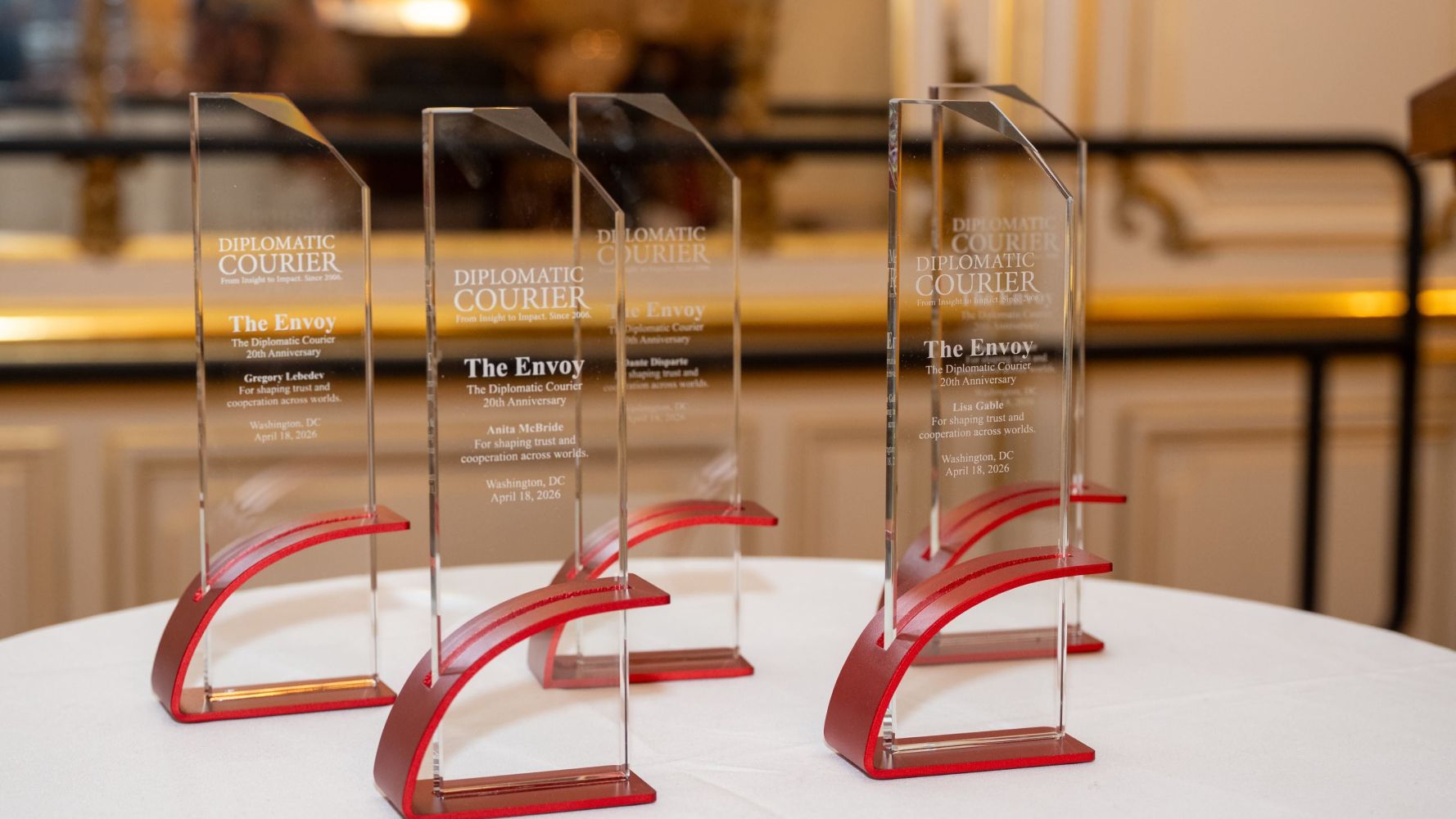
The first Envoy Awards, by Diplomatic Courier, winners announced at The Embassy Spring Soirée: Diplomacy In Bloom. Held April 18, 2026, at the Cosmos Club, Washington DC. Photo by Marcellus McIntosh for Diplomatic Courier.
May 6, 2026
Some of the world’s most important negotiators may never hold the actual title and that should surprise no one. How are they able to do it? By cultivating skills allowing them to move seamlessly across sectors, being trusted but never captured by the concerns of that sector, writes Ana C. Rold.
F
or most of its modern history, diplomacy came in a carefully curated package: credentials, buildings, flags, the carefully choreographed handshakes that signal to the world that something official is happening. That architecture still exists and it still matters. But it has stopped being sufficient to the task of navigating a fragmented world.
Ask anyone who has spent a career inside that architecture what made them good at it, and the answer is rarely the credential. It’s the capacity to move fluidly across contexts. To speak the language of finance in one room and civil society in the next. To hold the trust of actors with competing interests without becoming captive to any of them. To read a room that isn’t speaking your language and find the register that works anyway. The best career diplomats are, at their core, polymaths and chameleons. The title was always the container but the skill is something else entirely.
Which is why it shouldn’t be surprising that the same skill keeps appearing outside the container.
The problems that define this era don’t respect the jurisdictions that underpin formal diplomacy. Climate change, pandemic preparedness, artificial intelligence, and debt architecture don’t resolve inside a single bilateral relationship or a multilateral framework moving at the pace of consensus. They resolve (when they resolve at all) because someone with credibility in multiple rooms decided to use their credibility to translate between sectors, absorb the friction of misaligned incentives, and keep unlikely partners at the table long enough for something to happen.
But that person is rarely called a diplomat. They might be a global health leader threading together governments, philanthropies, and private companies to deliver care where systems have failed. A corporate executive who has decided that the long–term viability of their business depends on the health of the societies it operates in and is willing to say so to regulators who are skeptical. A financial innovator who could litigate for oversight and has calculated that cooperation produces better outcomes for everyone, including themselves. None of them carry diplomatic credentials. All of them are doing diplomatic work: building trust across differences, moving ideas into action, holding space for conversations that institutions alone cannot have.
They can do it for the same reason great career diplomats can: because they learned, somewhere along the way, to navigate across sectors without losing themselves in any one of them. That capacity, call it diplomatic intelligence, doesn’t belong to a profession. It belongs to a type of person. And that type of person shows up everywhere.
What we’ve lacked is language for describing this type of person, and the recognition that goes with it.
Awardees from left to right: Dante Disparte, Anita McBride, Lisa Gable, Ana C. Rold (Host), Daniella Foster, Greg Lebedev. Photo by Marcellus McIntosh for Diplomatic Courier.
That’s the gap The Envoys is designed to address. The premise is that diplomacy has always been, at its core, a set of behaviors — translating, bridging, negotiating across the lines that divide — and that those behaviors are now being practiced far beyond the institutions that traditionally claimed ownership of them. The people doing this work deserve to be recognized not as adjacent to diplomacy but as practitioners of it, in the same tradition as the career diplomats who built that practice over generations.
If the challenges of this century are networked (and they are) then the diplomacy required to address them has to be as well. That means looking for it in boardrooms and laboratories and community organizations, not just in embassies. It means building a different kind of recognition infrastructure, one that names what’s actually happening rather than what the org chart says.
Indeed, the title was always the least important part, the competence was the point.


