


t the recent PVBLIC Foundation Global Health Futures Forum at UNGA 81, we called our opening conversation "The Global Health Reckoning," and we chose the word with care. The health systems most of us grew up with were built to do one job extraordinarily well: find disease and treat it. At their core though, they are sick-care systems. They wait for something to go wrong, and then they go to work. That model delivered a century of astonishing progress, but it was designed for a world that is quickly disappearing.
The world arriving now asks a different question. People are living far longer, chronic conditions make up most of what health systems carry, and the cost of rescuing people once they are already sick keeps outrunning budgets. The central task is shifting from managing disease to managing longevity, which means helping people stay healthy across much longer lives. That shift from sick care to well care changes almost everything: where care happens, who delivers it, what we measure, and who is actually in charge.
The last of those is the one I find most exciting. For the first time, the tools exist to move each of us from being a patient, someone things are done to, usually too late, to being a person with real agency over their own health. I have started to think of it this way: we are all becoming the CEOs of our own health. If that is true, the job of health systems, and of the companies building within them, is to give us the information, access, and intelligence to run that company well.
The two leaders on stage with me approach that job from opposite ends. George Tomeski, co-founder and CEO of Helfie AI, is building a platform that turns a smartphone into a personal health check for early detection of preventable conditions, from skin cancers to respiratory and cardiovascular disease. His stated ambition is to reach all eight billion people on the planet. Dr. Stephen Shaya is a family physician who leads J&B Medical and manages the family office Akkad Holdings. He sees the delivery system as it actually exists across dozens of countries, with all its friction around cost, distribution, and habit.
Between those two vantage points sit the practical difficulties of the reckoning. Shaya reinforced the distinction between developing technology and delivering care. A phone can flag a warning, but a warning helps only if a system is ready to act on it. Screening at global scale works only if people trust both the accuracy of the result and what happens to their data. Tomeski envisions early detection that is affordable and conveniently integrated into everyday life, with individuals maintaining control of their own health data. That is why data ownership and choice belong in the architecture rather than in the fine print. And prevention has always had a financing problem. Its payoff arrives years later, while today's systems are paid mostly to treat the sick. Until investors and payers find ways to reward keeping people well, rather than simply treating illness, well care will remain more aspiration than reality.
A risk also hides inside the idea of health CEOs. Those who can afford the newest phones and technology, have access to the best data, or have the most time could pull further ahead. Those with fewer resources, and who likely have the greatest need for earlier care, could fall further behind. Agency that is distributed unequally becomes another form of inequity. Closing that gap depends on affordability, on health literacy, and on public systems that treat these tools as part of care rather than a replacement for it.
That is why I asked each panelist to name the one thing about today's system that has to break or be given up, since a reckoning means letting go of something. My own answer is that we need to stop judging health systems by how well they treat illness instead of how long they keep people well. By 2050, I hope an ordinary person experiences health less as a series of emergencies and more as something they manage every day, with good information close at hand.
Editorial note: This article was adapted from the Global Health Futures Forum at UNGA 81, where Ana C. Rold moderated the high-level panel: “The Global Health Reckoning.”
AI disclosure note: AI [Claude Opus 5.5] assisted in the distillation of transcripts from the event. These were used to outline the article before it was drafted by a human.


a global affairs media network
We Are All Becoming the CEOs of Our Own Health
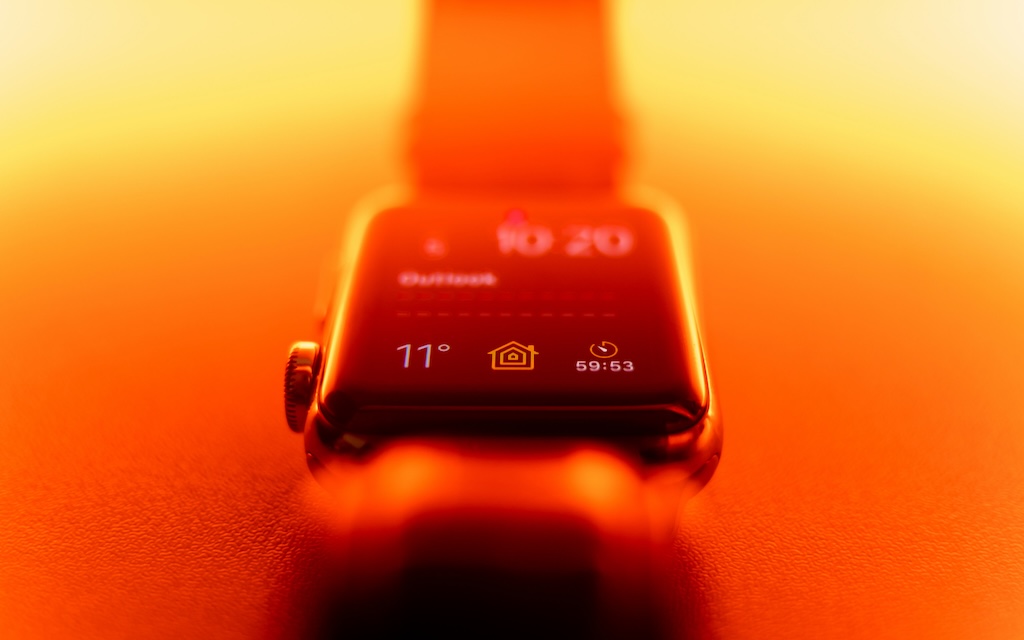
Photo by Kreeson Naraido via Unsplash.
October 9, 2026
Health systems built to treat disease are straining under longer lives and rising chronic illness. At UNGA 81, Ana C. Rold argued that the next era belongs to well care, in which people gain real agency over their own health, as long as that agency reaches everyone.
A
t the recent PVBLIC Foundation Global Health Futures Forum at UNGA 81, we called our opening conversation "The Global Health Reckoning," and we chose the word with care. The health systems most of us grew up with were built to do one job extraordinarily well: find disease and treat it. At their core though, they are sick-care systems. They wait for something to go wrong, and then they go to work. That model delivered a century of astonishing progress, but it was designed for a world that is quickly disappearing.
The world arriving now asks a different question. People are living far longer, chronic conditions make up most of what health systems carry, and the cost of rescuing people once they are already sick keeps outrunning budgets. The central task is shifting from managing disease to managing longevity, which means helping people stay healthy across much longer lives. That shift from sick care to well care changes almost everything: where care happens, who delivers it, what we measure, and who is actually in charge.
The last of those is the one I find most exciting. For the first time, the tools exist to move each of us from being a patient, someone things are done to, usually too late, to being a person with real agency over their own health. I have started to think of it this way: we are all becoming the CEOs of our own health. If that is true, the job of health systems, and of the companies building within them, is to give us the information, access, and intelligence to run that company well.
The two leaders on stage with me approach that job from opposite ends. George Tomeski, co-founder and CEO of Helfie AI, is building a platform that turns a smartphone into a personal health check for early detection of preventable conditions, from skin cancers to respiratory and cardiovascular disease. His stated ambition is to reach all eight billion people on the planet. Dr. Stephen Shaya is a family physician who leads J&B Medical and manages the family office Akkad Holdings. He sees the delivery system as it actually exists across dozens of countries, with all its friction around cost, distribution, and habit.
Between those two vantage points sit the practical difficulties of the reckoning. Shaya reinforced the distinction between developing technology and delivering care. A phone can flag a warning, but a warning helps only if a system is ready to act on it. Screening at global scale works only if people trust both the accuracy of the result and what happens to their data. Tomeski envisions early detection that is affordable and conveniently integrated into everyday life, with individuals maintaining control of their own health data. That is why data ownership and choice belong in the architecture rather than in the fine print. And prevention has always had a financing problem. Its payoff arrives years later, while today's systems are paid mostly to treat the sick. Until investors and payers find ways to reward keeping people well, rather than simply treating illness, well care will remain more aspiration than reality.
A risk also hides inside the idea of health CEOs. Those who can afford the newest phones and technology, have access to the best data, or have the most time could pull further ahead. Those with fewer resources, and who likely have the greatest need for earlier care, could fall further behind. Agency that is distributed unequally becomes another form of inequity. Closing that gap depends on affordability, on health literacy, and on public systems that treat these tools as part of care rather than a replacement for it.
That is why I asked each panelist to name the one thing about today's system that has to break or be given up, since a reckoning means letting go of something. My own answer is that we need to stop judging health systems by how well they treat illness instead of how long they keep people well. By 2050, I hope an ordinary person experiences health less as a series of emergencies and more as something they manage every day, with good information close at hand.
Editorial note: This article was adapted from the Global Health Futures Forum at UNGA 81, where Ana C. Rold moderated the high-level panel: “The Global Health Reckoning.”
AI disclosure note: AI [Claude Opus 5.5] assisted in the distillation of transcripts from the event. These were used to outline the article before it was drafted by a human.


