


hat am I supposed to do?” That question is being asked by fishers all over the Caribbean who face any kind of disruption to their ability to fish. Many thousands of artisanal and small–scale fishers make their homes and ply their trade in the Caribbean. They now face a daunting set of challenges including depleted fisheries, rising costs, and lack of consistent fisheries monitoring and enforcement. When speaking with fishers in the region, however, one challenge repeatedly comes up: lack of access to formal financing. A fisher who can’t access the financing to get a motor repaired or gear upgraded is at risk of losing everything. Desperate fishers are increasingly targeted by criminal groups and bad actors of all kinds, extorting them into trafficking drugs, arms, humans, and other contraband and ensuring that maritime crime becomes endemic. One effective crime reduction strategy for the Caribbean, then, is gaining fishers meaningful access to formal financing.
The reasons for the lack of access are clear enough. Financial institutions tend to offer limited services at best in many of the areas where small–scale fishers live, and even when banks have an operational presence they often regard the small–scale fishing (SSF) sector as high risk without understanding it. From the fishers’ side, applying for mainstream financing can be extraordinarily burdensome, with lengthy applications, high interest rates, and difficulties with physical and financial infrastructure. Many fishers, as skilled as they are in other areas, lack the financial literacy to navigate formal credit.
But a more insidious problem haunts small–scale fishing as well as other traditional livelihoods such as artisanal mining. When formal financing is elusive, informal financing presents an appealing alternative. And some of the most forthcoming financiers are organized criminal groups. Just as the Caribbean is full of small–scale fishers, it is replete with maritime smuggling routes for everything from drugs and weapons to migrants and wildlife. To the criminal networks exploiting those routes, fishers, with their ubiquitous boats and intimate knowledge of local waters, are ideal recruits. If a fisher is working a depleted fishery, lacks the cash for a new motor, and can’t get service from a bank, traffickers will be glad to offer financing. They make it easy, for a different sort of price, and the incentives can be difficult to resist. The goods being smuggled wreak damage in the Caribbean and beyond.
In that light, access to formal financing is a potent protection against the criminal exploitation of vulnerable fishers, who are far less likely to seek income from illicit or criminal activities if they can make a better living because legitimate actors are investing in their business.
Around the world, diverse approaches have been developed to fill this need. The FAO’s CAFI SSF network has worked in multiple locations, testing different credit facilities with varying viability. Impact investment by private donors, while laudable in principle, can be subject to the attention span of those donors, who may not understand the sector. Blended finance, in which public funding attracts and assures private finance, is a more promising approach. In Tanzania, two models have been put forth: one in which a bank contracts with a network of agents who provide suitable services for SSF, and another in which a microfinance company establishes mini branches and kiosks in the same local areas. Other models, such as the Peru Artisanal Fisher Development Fund, work through fishers’ co–ops, whose aggregated purchasing power and fiscal accountability attract more investment from banks.
Very little of this work, however, has built a significant presence in the Caribbean. One notable exception is the Artisanal Fishing Loan pilot currently under way in Belize, organized by the World Wildlife Fund and Wildlife Conservation Society in coordination with the Development Finance Corporation of Belize. It is an attempt to provide a comprehensive package of sustainable financial support: loans at interest between 8.5% and 12% (8% to 11% for women fishers), education in financial literacy, and training in both sustainable fishing practices and Belizean fisheries regulations. While still in its infancy, it holds considerable promise. Still, Belize is one small jurisdiction with modest fisheries, and it is not part of the insular Caribbean community.
Any such programs must account for potential downsides. Above all, they must not be burdensome for fishers. If fishers have to travel significant distances, fill out piles of paperwork, and pay unexpected fees, informal financing will still look appealing. There may also be knock–on effects that will prove destructive if unregulated. Well–financed fishers purchase better gear and become more efficient; as a result, they catch more fish. As one Ghanaian study concluded, fishers with access to financing can potentially crowd out those who lack it, while at the same time catching more fish and further depleting fisheries. So any state launching a program to finance SSF must yoke it to strong regulatory frameworks and improved monitoring and enforcement.
With those cautions in mind, the Caribbean has enormous promise for financing programs, even at a regional level. Given that many of its small states share currency and already coordinate regionally on maritime issues, the establishment of a Caribbean Credit Facility or Regional Fishers’ Bank, which could blend public and private financing while also adding transparency to the SSF sector and functioning as an effective regulator, is a reasonable, achievable goal. Funding for such an initiative could even be drawn from licensing fees, financial penalties, and other revenues from the fisheries sector.
As the Caribbean looks to make its fisheries more sustainable, it needs to achieve the difficult but doable balance of supporting investment in its SSF while preserving its fish stocks. In the process, it should remember that where formal financing falls short, predatory informal financing flourishes. In ensuring that the region’s small–scale fishers get the investment they need, the Caribbean will also make things more difficult for the criminal networks that use its waters for their destructive enterprises.


a global affairs media network
Finance small–scale fishers to reduce crime in the Caribbean
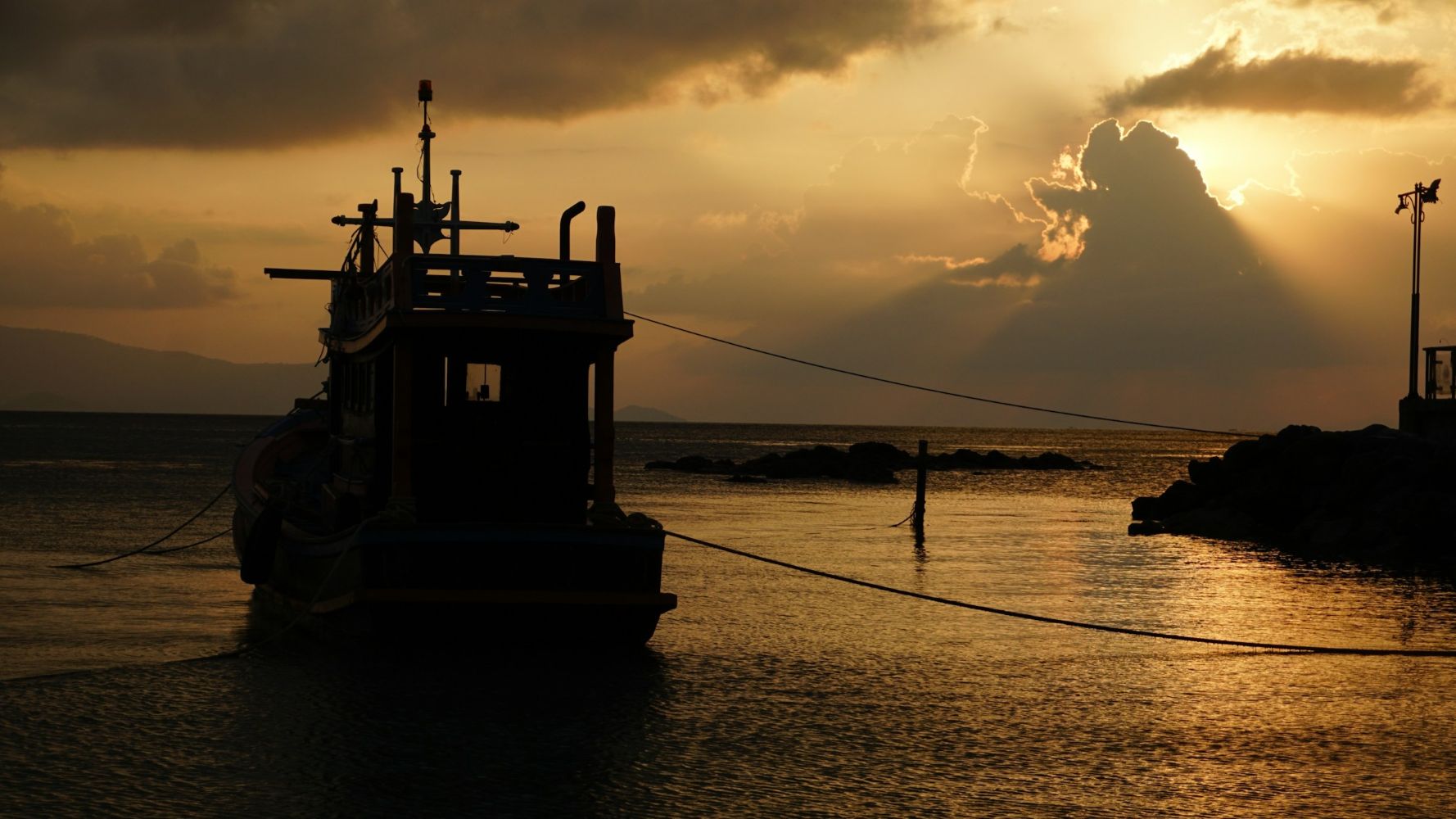
Image via Adobe Stock.
February 23, 2026
The lack of formal financing makes Caribbean fishers vulnerable to criminal exploitation, so improving credit access is crucial to improve lives and limit crime, write Dr. David Soud and Dr. Ian Ralby.
W
hat am I supposed to do?” That question is being asked by fishers all over the Caribbean who face any kind of disruption to their ability to fish. Many thousands of artisanal and small–scale fishers make their homes and ply their trade in the Caribbean. They now face a daunting set of challenges including depleted fisheries, rising costs, and lack of consistent fisheries monitoring and enforcement. When speaking with fishers in the region, however, one challenge repeatedly comes up: lack of access to formal financing. A fisher who can’t access the financing to get a motor repaired or gear upgraded is at risk of losing everything. Desperate fishers are increasingly targeted by criminal groups and bad actors of all kinds, extorting them into trafficking drugs, arms, humans, and other contraband and ensuring that maritime crime becomes endemic. One effective crime reduction strategy for the Caribbean, then, is gaining fishers meaningful access to formal financing.
The reasons for the lack of access are clear enough. Financial institutions tend to offer limited services at best in many of the areas where small–scale fishers live, and even when banks have an operational presence they often regard the small–scale fishing (SSF) sector as high risk without understanding it. From the fishers’ side, applying for mainstream financing can be extraordinarily burdensome, with lengthy applications, high interest rates, and difficulties with physical and financial infrastructure. Many fishers, as skilled as they are in other areas, lack the financial literacy to navigate formal credit.
But a more insidious problem haunts small–scale fishing as well as other traditional livelihoods such as artisanal mining. When formal financing is elusive, informal financing presents an appealing alternative. And some of the most forthcoming financiers are organized criminal groups. Just as the Caribbean is full of small–scale fishers, it is replete with maritime smuggling routes for everything from drugs and weapons to migrants and wildlife. To the criminal networks exploiting those routes, fishers, with their ubiquitous boats and intimate knowledge of local waters, are ideal recruits. If a fisher is working a depleted fishery, lacks the cash for a new motor, and can’t get service from a bank, traffickers will be glad to offer financing. They make it easy, for a different sort of price, and the incentives can be difficult to resist. The goods being smuggled wreak damage in the Caribbean and beyond.
In that light, access to formal financing is a potent protection against the criminal exploitation of vulnerable fishers, who are far less likely to seek income from illicit or criminal activities if they can make a better living because legitimate actors are investing in their business.
Around the world, diverse approaches have been developed to fill this need. The FAO’s CAFI SSF network has worked in multiple locations, testing different credit facilities with varying viability. Impact investment by private donors, while laudable in principle, can be subject to the attention span of those donors, who may not understand the sector. Blended finance, in which public funding attracts and assures private finance, is a more promising approach. In Tanzania, two models have been put forth: one in which a bank contracts with a network of agents who provide suitable services for SSF, and another in which a microfinance company establishes mini branches and kiosks in the same local areas. Other models, such as the Peru Artisanal Fisher Development Fund, work through fishers’ co–ops, whose aggregated purchasing power and fiscal accountability attract more investment from banks.
Very little of this work, however, has built a significant presence in the Caribbean. One notable exception is the Artisanal Fishing Loan pilot currently under way in Belize, organized by the World Wildlife Fund and Wildlife Conservation Society in coordination with the Development Finance Corporation of Belize. It is an attempt to provide a comprehensive package of sustainable financial support: loans at interest between 8.5% and 12% (8% to 11% for women fishers), education in financial literacy, and training in both sustainable fishing practices and Belizean fisheries regulations. While still in its infancy, it holds considerable promise. Still, Belize is one small jurisdiction with modest fisheries, and it is not part of the insular Caribbean community.
Any such programs must account for potential downsides. Above all, they must not be burdensome for fishers. If fishers have to travel significant distances, fill out piles of paperwork, and pay unexpected fees, informal financing will still look appealing. There may also be knock–on effects that will prove destructive if unregulated. Well–financed fishers purchase better gear and become more efficient; as a result, they catch more fish. As one Ghanaian study concluded, fishers with access to financing can potentially crowd out those who lack it, while at the same time catching more fish and further depleting fisheries. So any state launching a program to finance SSF must yoke it to strong regulatory frameworks and improved monitoring and enforcement.
With those cautions in mind, the Caribbean has enormous promise for financing programs, even at a regional level. Given that many of its small states share currency and already coordinate regionally on maritime issues, the establishment of a Caribbean Credit Facility or Regional Fishers’ Bank, which could blend public and private financing while also adding transparency to the SSF sector and functioning as an effective regulator, is a reasonable, achievable goal. Funding for such an initiative could even be drawn from licensing fees, financial penalties, and other revenues from the fisheries sector.
As the Caribbean looks to make its fisheries more sustainable, it needs to achieve the difficult but doable balance of supporting investment in its SSF while preserving its fish stocks. In the process, it should remember that where formal financing falls short, predatory informal financing flourishes. In ensuring that the region’s small–scale fishers get the investment they need, the Caribbean will also make things more difficult for the criminal networks that use its waters for their destructive enterprises.


